010. Understanding House Division
House division is one of the more commonly debated topics among astrologers. I am not here to persuade you in one direction or another. My goal is to introduce you to the three main approaches to house division so you can understand the differences and make informed choices. Each system has its strengths, and interpretive success can be found with any of them. The three main branches of house division are Whole Sign Houses, Equal Houses, and Quadrant Houses.
From a foundational standpoint, it is important to know that houses are a way of dividing the astrology wheel into twelve parts. Each part represents a specific area of life and has a planetary ruler. Regardless of the method of house division, an accurate date, location, and precise time of birth are essential. All house systems rely on the Ascendant, which is the sign rising over the eastern horizon at the time of birth. The Ascendant sets the starting point for the first house and influences the structure of the rest of the chart.
Whole Sign Houses
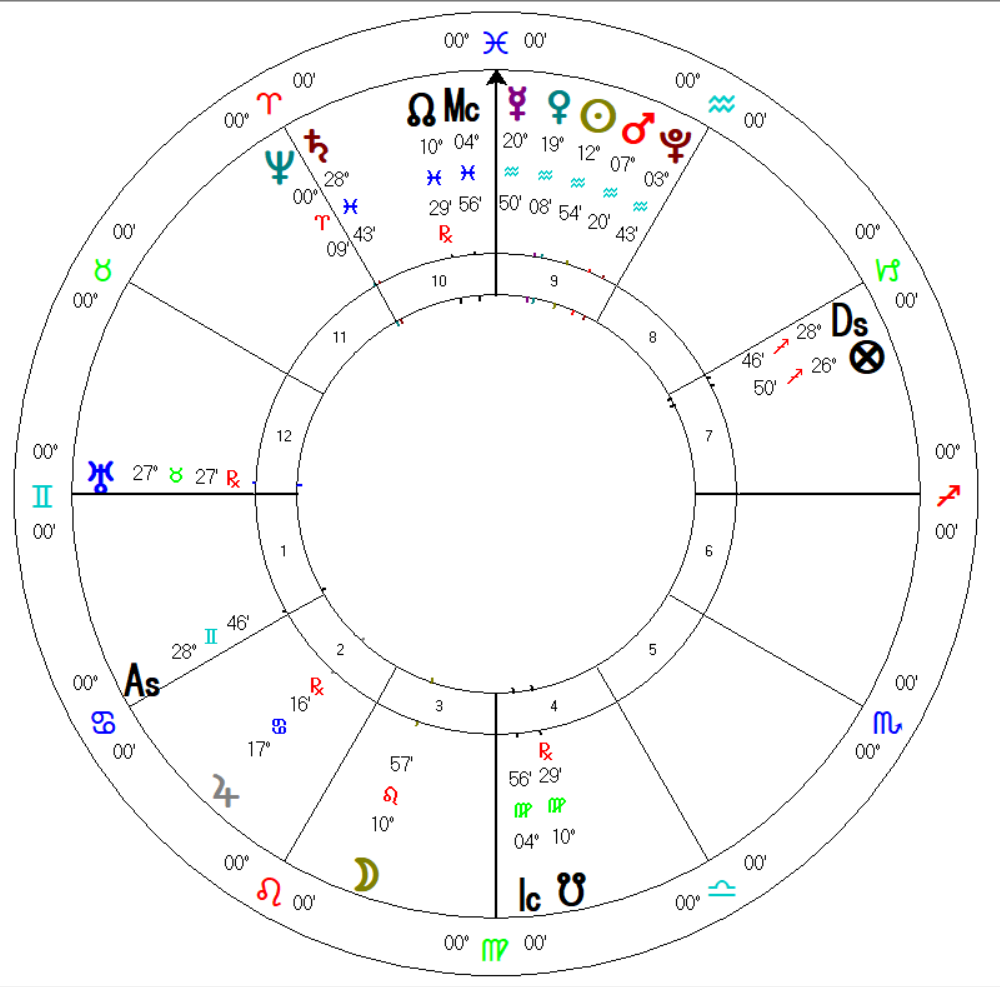
Whole Sign Houses are among the oldest forms of house division. In this system, the astrology wheel is divided into twelve equal houses of 30 degrees each. Each house contains only one sign, beginning at 0 degrees of a sign and ending at 0 degrees of the next sign. The first house is determined by the sign of the Ascendant.
For example, if a chart has a Gemini Ascendant, the first house becomes Gemini, the second house Cancer, the third house Leo, and so on. Each house is therefore influenced solely by the ruler of its sign. Even the MC/IC axis can extend beyond the 10th house into other houses, depending on interpretation.
Whole Sign Houses are simple and elegant, making them an excellent system for beginners because each house has a clear, singular focus.
Equal Houses
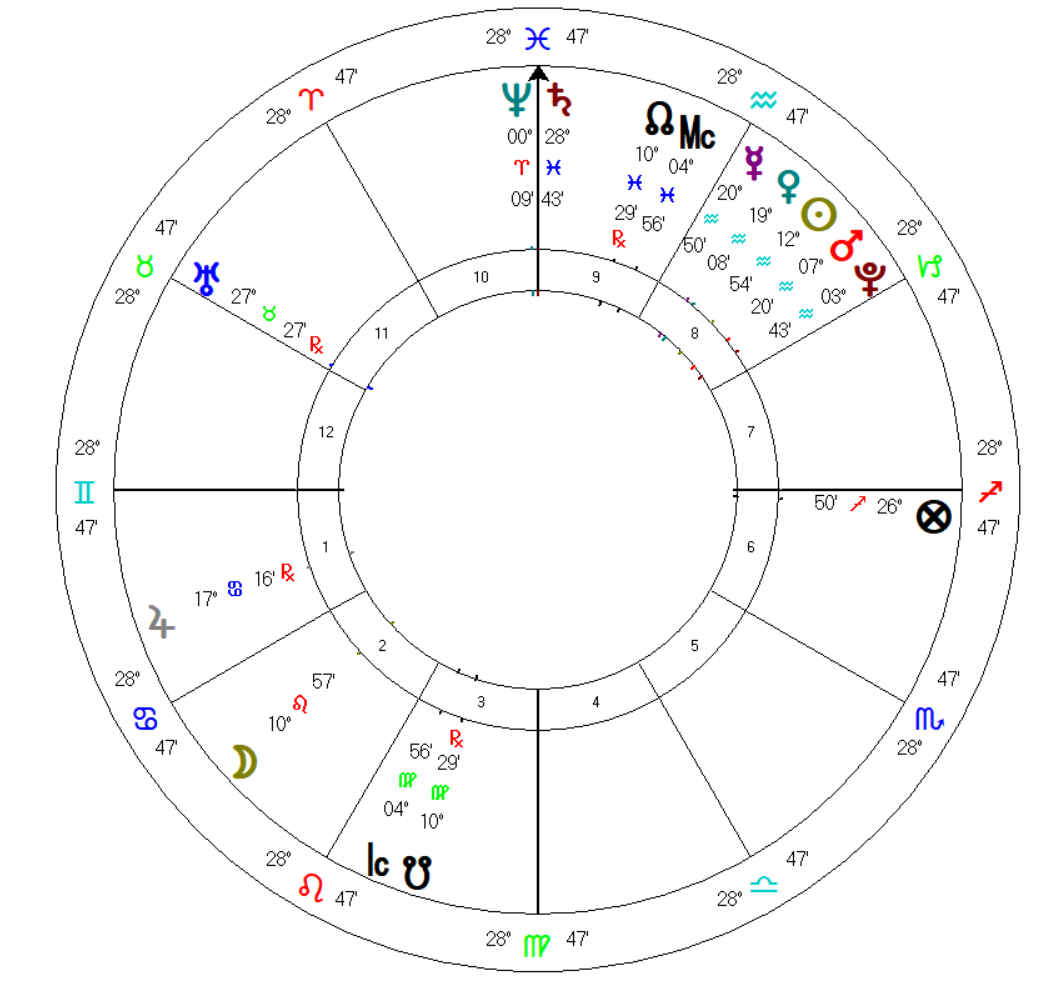
Equal Houses also divides the chart into twelve houses of 30 degrees each, but the placement is slightly different. In this system, the degree of the Ascendant determines the start of the first house, which then extends exactly 30 degrees. The next house begins 30 degrees from that point, and so on.
For example, if the Ascendant is at 28 degrees of Gemini, the first house will extend from 28 degrees Gemini to 28 degrees Cancer, which then becomes the starting point of the second house. Each house can contain up to two signs, meaning it may be influenced by the rulers of both signs present. Like Whole Sign Houses, the MC/IC axis can extend beyond the 10th house.
Equal Houses maintain a balance between precision and simplicity. They are often appreciated by astrologers who want an exact degree placement while still keeping the chart readable and organized.
Quadrant Houses
Quadrant Houses are among the most common in modern Western astrology. This approach uses the degrees of both the MC (Midheaven) and the Ascendant to determine house placement. Houses in this system vary in size, and charts from extreme latitudes can result in very large or very small houses.
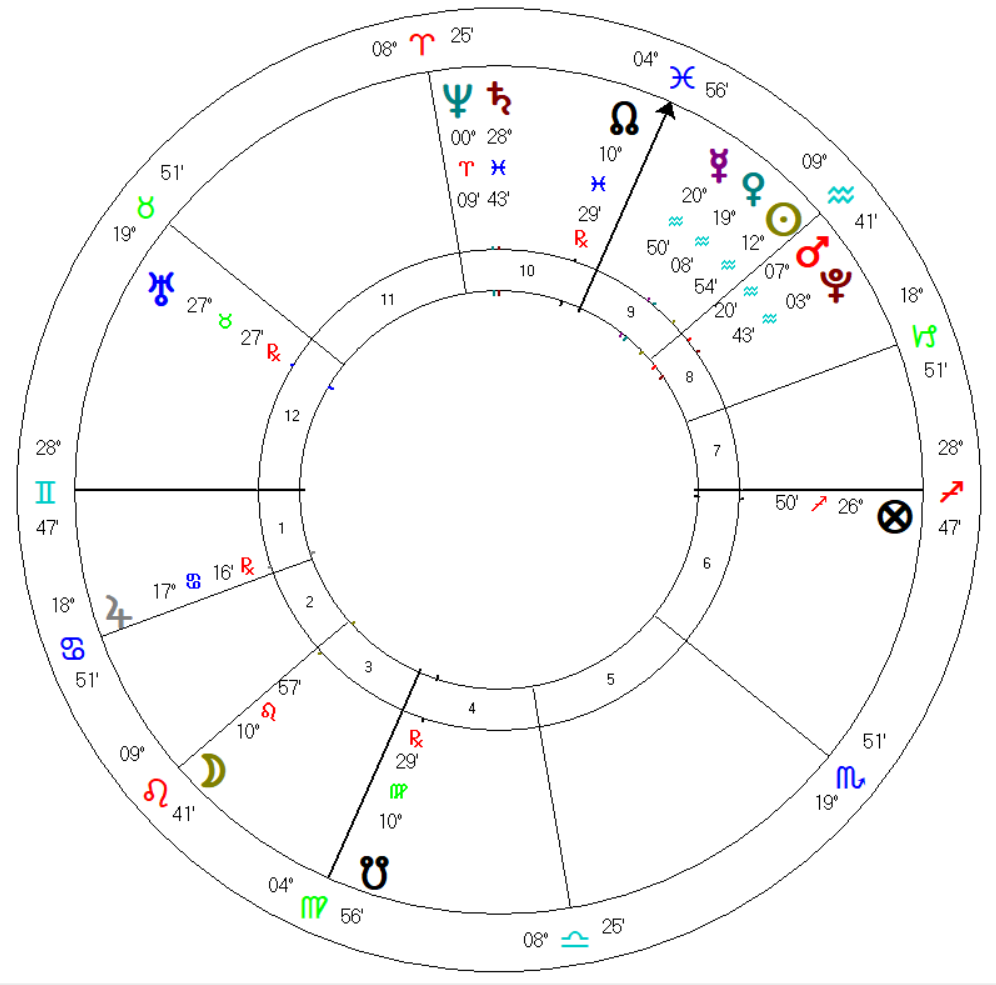
In a basic overview, the MC typically starts the 10th house and the Ascendant starts the first house. The rest of the houses are calculated using mathematical formulas that take into account diurnal rotation and other astronomical factors. One of the most widely used Quadrant systems is Placidus, which relies on precise rotation calculations to determine unequal house sizes.
Quadrant Houses provide a detailed and dynamic representation of life areas, reflecting the unique geographic and temporal circumstances of a birth chart. However, because the houses are unequal, this system can feel more complex to beginners.
Below is an example of a chart casted in Placidus house division:
Choosing a House System
As a beginner, you need to decide which form of house division you want to start with. Whole Sign Houses are simple and archetypal, Equal Houses add precision without overwhelming complexity, and Quadrant Houses offer detailed, real-world accuracy.
Do not limit yourself to just one system. Explore all three, test them in your readings, and observe which produces the most consistent and accurate insights. Over time, you may find yourself combining approaches or favoring different systems for different chart types. Astrology is not about strict rules. It is about discovering which tools best illuminate the story of a chart.
Additional Notes for Beginners
It is easy to feel confused when first learning houses because each system can produce different results for the same chart. Understanding the philosophical differences between them helps. Whole Sign Houses focus on the archetypal story of the signs, Equal Houses focus on degree precision, and Quadrant Houses reflect the actual rotation and geography of the sky at birth. By keeping this perspective in mind, you can use each system intentionally rather than getting lost in technical details.

Corey Neulieb, Founder of Pathway Light by Corey
Corey Neulieb is a traditional astrologer, astrology educator, and consulting practitioner who has been studying and practicing astrology seriously since 2020. His work draws primarily from Western and Hellenistic traditions, with an emphasis on historical techniques, foundational symbolism, and experiential learning.
In addition to teaching and writing, Corey offers astrology consultations that focus on practical application, clarity, and long-term understanding. His consulting work informs his educational approach, grounding astrological concepts in lived experience and repeated observation rather than abstract theory alone.
Corey’s teaching philosophy centers on the belief that book study forms only part of the learning process. While structured study is essential, meaningful astrological understanding develops through experience—working with charts, tracking cycles, and reflecting on how symbolism manifests over time. Through writing, education, mentorship, and consultation, Corey aims to support students and clients in building a thoughtful, grounded, and enduring relationship with astrology.
